AI: GrokBot's Agent Ambitions, ChatGPT's Intelligent UI and Claude Cowork in the Cloud
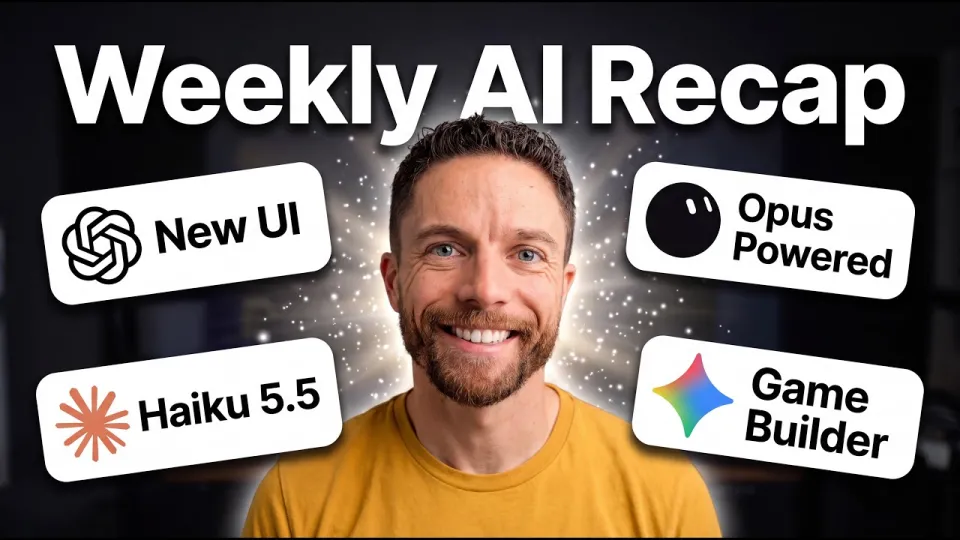
Video: Weekly AI Recap: GrokBot Just Did the Unthinkable, ChatGPT Looks Completely Different & More!
Need articles like this for your video? They help promote it on YouTube and Google — order them in the Telegram bot @sat_sit_bot. Articles with your video embedded are written and posted by the bot itself — on popular topical sites (no ads). Free trial — 50 articles.
Key takeaways
- GrokBot is positioned as an agent that could call outside tools such as Claude, Midjourney and Suno rather than rely on a single model.
- ChatGPT's Intelligent UI reshapes the chat interface so the model picks the right tool or layout for a task instead of showing one blank box.
- Claude Cowork moves from a local desktop experiment to a cloud service, making it usable for teams rather than a single machine.
- Google is reworking Gemini plan tiers while shipping Nano Banana 2.1 for image generation.
- The weekly recap comes from Paul J Lipsky's channel and bundles OpenAI, Anthropic, Google and xAI news into one rundown.
AI this week looks less like a race between chatbots and more like a race between agents that borrow other companies' tools. The clearest signal is GrokBot, xAI's bot layer, which is being pitched as a coordinator that can reach for Claude, Midjourney and Suno when a task needs writing, images or audio. If you want to try the agent-style workspace discussed alongside these updates, you can register for Okou and get the launch offer, the sponsor of this week's recap.
What GrokBot actually changes about AI assistants
GrokBot is best understood as an orchestration layer rather than a single model: it decides which tool to call and stitches the results into one answer. That is a meaningful shift from the chat-box era, where you picked a model and lived with its weaknesses. A bot that can hand a writing task to Claude, an image prompt to Midjourney and a soundtrack to Suno behaves more like a small production team than a chatbot.
The practical upside is coverage. No single model leads on every task, and routing work to specialists can beat asking one generalist to do everything. The practical risk is accountability: when three vendors touch one output, it becomes harder to say which step introduced an error, a licensing problem or a hallucinated fact. Expect the interesting questions in the next few months to be about permissions, cost per task and how transparently a bot reports which tools it used.
Viewers of the recap picked up on this quickly, describing workflows where a bot was handed a folder of raw video clips and returned a script, a voice track plan and a finished cut that beat paid freelance work. That is the promise of agentic AI in one anecdote: less typing prompts, more delegating outcomes.
ChatGPT's Intelligent UI and what OpenAI is signaling
ChatGPT's new Intelligent UI is an admission that a single text field is a poor interface for a model that can browse, write code, generate images and run tools. Instead of showing the same blank prompt box for every request, the interface adapts: it surfaces the relevant capability, changes layout depending on the task and reduces the number of manual mode switches a user has to make.
Why it matters beyond cosmetics:
- Discoverability. Most users never find half of a model's features because they are buried in menus. A UI that responds to intent puts those features in front of people at the moment they are useful.
- Fewer failed prompts. When the interface frames the task, users give better instructions, which raises output quality without any model upgrade.
- Product differentiation. As raw model quality converges across vendors, interface and workflow become the thing companies compete on.
The trade-off is control. Adaptive interfaces can hide settings that power users rely on, and they can nudge people toward whatever the vendor prefers to promote. The healthier pattern is an interface that adapts by default but keeps a predictable escape hatch to manual modes.
Claude Cowork moves to the cloud
Claude Cowork is Anthropic's attempt to make Claude useful for shared work rather than solo chat, and its move to the cloud is the part that changes adoption. A local-only tool is limited to one machine and one person's files; a cloud version can be reached by a team, tied to shared documents and used without a powerful laptop.
For teams, the questions that follow are familiar ones. Who owns the workspace, how are permissions scoped, and what happens to sensitive documents once they enter a shared environment? Anthropic's enterprise pitch has leaned on safety and controllability, so expect access controls and auditability to be the selling points rather than raw benchmark scores.
The recap also touched on Claude Haiku 5.5, the small fast model in the Claude family. Lightweight models matter more than they sound: they are what makes agentic workflows affordable, because a coordinator bot can run dozens of cheap calls to a small model before spending money on a large one for the final answer.
Google's Gemini plans, Playground and Nano Banana 2.1
Google's week was about packaging as much as models. Gemini plan changes reshuffle what subscribers get at each tier, and the details matter more than the headline: higher tiers bundle storage and access to the top Pro model, so the effective value of a plan depends on whether you already pay for cloud storage separately. Anyone comparing tiers should price the bundle, not just the AI features.
On the creative side, Nano Banana 2.1 continues Google's image-generation line, refining the model that became popular for editing existing images with natural-language instructions rather than generating from scratch. The pattern to watch is consistency: better preservation of faces, text and layout across edits is what turns an image model from a toy into a production tool.
Google Playground, the experimental surface for trying models and prompts, is worth a look for anyone who wants to test capabilities before committing to a subscription. Experimental tools are also where Google tends to preview interface ideas that later appear in consumer products, so they are a reasonable proxy for where Gemini is heading.
Common questions from people following these AI updates
Three recurring concerns come up whenever a week like this lands.
First, tool overload. If GrokBot calls Claude, Midjourney and Suno, do you need subscriptions to all of them? Not necessarily, but the economics of agentic AI depend on how the coordinator bills for third-party calls, and that is usually answered in the fine print rather than the launch post.
Second, the missing-onboarding problem. Several users report deleting an unfamiliar bot that appeared in their workspace without explanation, only to find they cannot restore it. Vendors rolling out agent features should explain new entries in a sidebar before shipping them, and users should check settings rather than delete unknown items.
Third, the skills gap. The most requested follow-up to this recap was a walkthrough of Claude Code for non-technical people, which tells you where the real friction sits: not in model quality, but in learning the new working style. Agentic tools reward people who can describe an outcome precisely and break work into steps, and that is a skill, not a setting.
Where this leaves the AI race
The through-line this week is composition: GrokBot composing other vendors' tools, ChatGPT composing capabilities behind an adaptive interface, Claude Cowork composing a team's documents into one workspace. Model benchmarks still matter, but the products people actually adopt will be judged on routing, permissions and cost per finished task. Watch for the boring details, pricing of tool calls, audit trails and restore options, because those decide whether agents survive contact with real work. This breakdown follows the weekly rundown published by Paul J Lipsky, whose channel tracks OpenAI, Anthropic, Google and xAI releases in a single format. If you want to test an agent-style workspace yourself, try Okou through the launch link and see how tool-calling holds up against your own workflow.
Questions & answers
Can GrokBot really use Claude, Midjourney and Suno at the same time?
The pitch is that GrokBot acts as a coordinator that routes parts of a task to outside tools, so a single request could involve writing, image generation and audio. The practical limits depend on how each integration is authorized and billed, which is usually spelled out in the product terms rather than the announcement.
Is ChatGPT's Intelligent UI just a redesign?
It is more than a visual refresh: the interface adapts to what you are trying to do and surfaces the relevant capability instead of showing one generic prompt box. That improves discoverability and prompt quality, though power users should check that manual controls remain accessible.
What does moving Claude Cowork to the cloud change for teams?
A cloud version removes the single-machine limit, so shared documents and multiple people can work in the same environment. The trade-off is that permissions, data handling and auditability become the deciding factors for whether a team can adopt it.
Do Google's Gemini plan changes mean I need a higher tier?
Only if you need the top Pro model or the bundled storage. Compare the total price of the plan against what you already pay for storage and other services, because the AI features alone rarely justify an upgrade for light users.
Source: Weekly AI Recap: GrokBot Just Did the Unthinkable, ChatGPT Looks Completely Different & More! · Markdown version